How to Return to Exercise after COVID-19 Infection

If you’re not a professional athlete (and therefore don’t have access to coaching staff and a medical team to monitor your training), it can be helpful to know the current guidelines on returning to sport after COVID-19 infection. As I’m sure we’re all aware – COVID-19 (“Corona virus”) is a relatively new virus. And with emerging variants, and more of the population being vaccinated, guidelines on how to return to training have changed a lot since 2020. Older guidelines suggested a slower return to sport. But the guidelines have changed.

With both widespread availability of vaccines, and the circulation of less deadly strains of COVID-19, the approach is no longer quite as conservative.
What is Pain? Current Knowledge from Pain Science

Pain is always created in the brain. 🧠 That doesn’t mean it’s all in your head. It’s still very real – it’s just a lot different to what we believed about pain a couple of decades ago.

We used to think there were “pain receptors” in the body that sent pain signals to the brain. It turns out, this isn’t the case.

Nociceptors send signals to the brain for processing. Nociceptors detect changes in temperature, pressure and chemicals and send “possible threat” messages to the brain.

The brain interprets this and decides how much protection you need. If the brain deems that pain will be protective (get you out of a potentially injurious situation), it will upregulate pain more than if it deems the situation safe.

Unfortunately… Pain can be learned. Our nervous system is great at learning. The brain can start to associate certain movements or situations with pain, even if the movement or situation is not causing tissue damage.

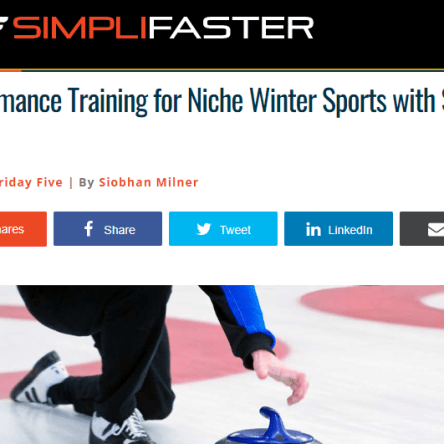
Siobhan Milner on Simplifaster: Performance Training for Niche Winter Sports

I spoke to Simplifaster about my work with TeamNL, my work in rehab, and my general philosophies around performance and training. I particularly like that they pulled out this quote … Continue reading Siobhan Milner on Simplifaster: Performance Training for Niche Winter Sports

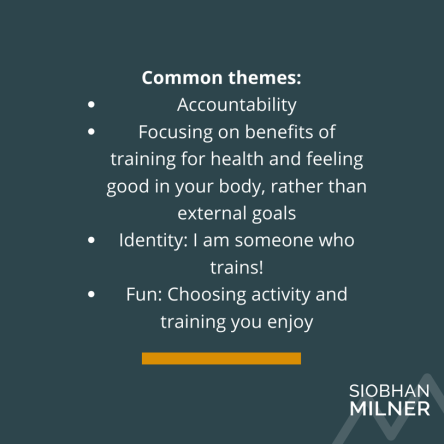
Why you should keep training even when you’re goal-less

I firmly believe that showing up to train on your worst days means you’ll always be there on the best days.
I want to remind you of some of the endless benefits of exercise training, even when it feels rough. I think even when we’re not training for anything in particular, these should be pretty strong reasons for us to keep filling out our training logs.