
What is the Nocebo Effect?
I wrote a little on my social media yesterday about avoiding nocebo-ing myself last year when I was going through an injury – but what IS the Nocebo effect? I … Continue reading What is the Nocebo Effect?
I wrote a little on my social media yesterday about avoiding nocebo-ing myself last year when I was going through an injury – but what IS the Nocebo effect? I … Continue reading What is the Nocebo Effect?

This one’s a question for the practitioners out there: If tissue “health” and pain are not well correlated, why would an intervention need to alter the state of tissue in … Continue reading Is progressive overload always required to move out of pain?

One of the most valuable understandings I took away from my Masters in Rehabilitation Science was a new understand of the intricacies of pain, and a foundational knowledge of pain science (and how different it is to what we used to think even a decade ago). So I was delighted when Science for Sport asked me to chat to them on their podcast about pain science. I spoke about the role of pain, gave a quick guide on how pain works, explained how pain in not a good indicator of tissue damage, and gave some tips on dealing with pain.

Pain is always created in the brain. 🧠 That doesn’t mean it’s all in your head. It’s still very real – it’s just a lot different to what we believed about pain a couple of decades ago.
We used to think there were “pain receptors” in the body that sent pain signals to the brain. It turns out, this isn’t the case.
Nociceptors send signals to the brain for processing. Nociceptors detect changes in temperature, pressure and chemicals and send “possible threat” messages to the brain.
The brain interprets this and decides how much protection you need. If the brain deems that pain will be protective (get you out of a potentially injurious situation), it will upregulate pain more than if it deems the situation safe.
Unfortunately… Pain can be learned. Our nervous system is great at learning. The brain can start to associate certain movements or situations with pain, even if the movement or situation is not causing tissue damage.
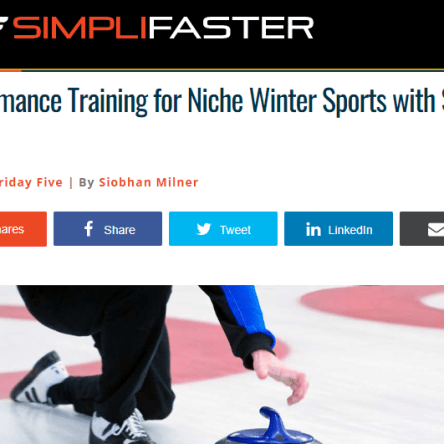
I spoke to Simplifaster about my work with TeamNL, my work in rehab, and my general philosophies around performance and training. I particularly like that they pulled out this quote … Continue reading Siobhan Milner on Simplifaster: Performance Training for Niche Winter Sports
 Siobhan Milner